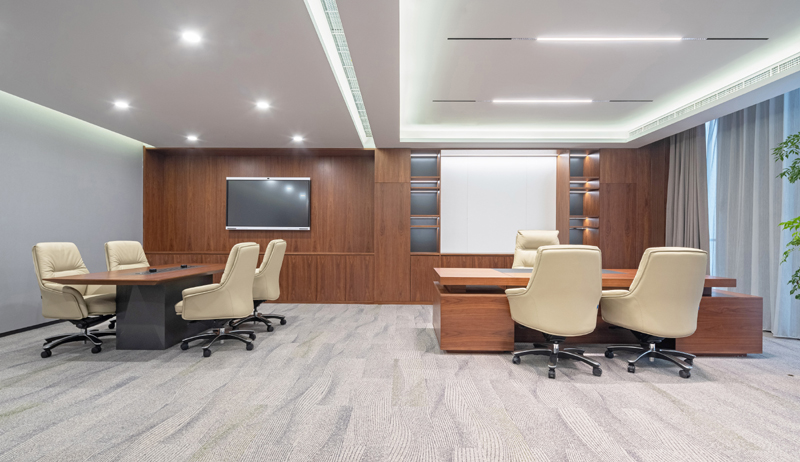

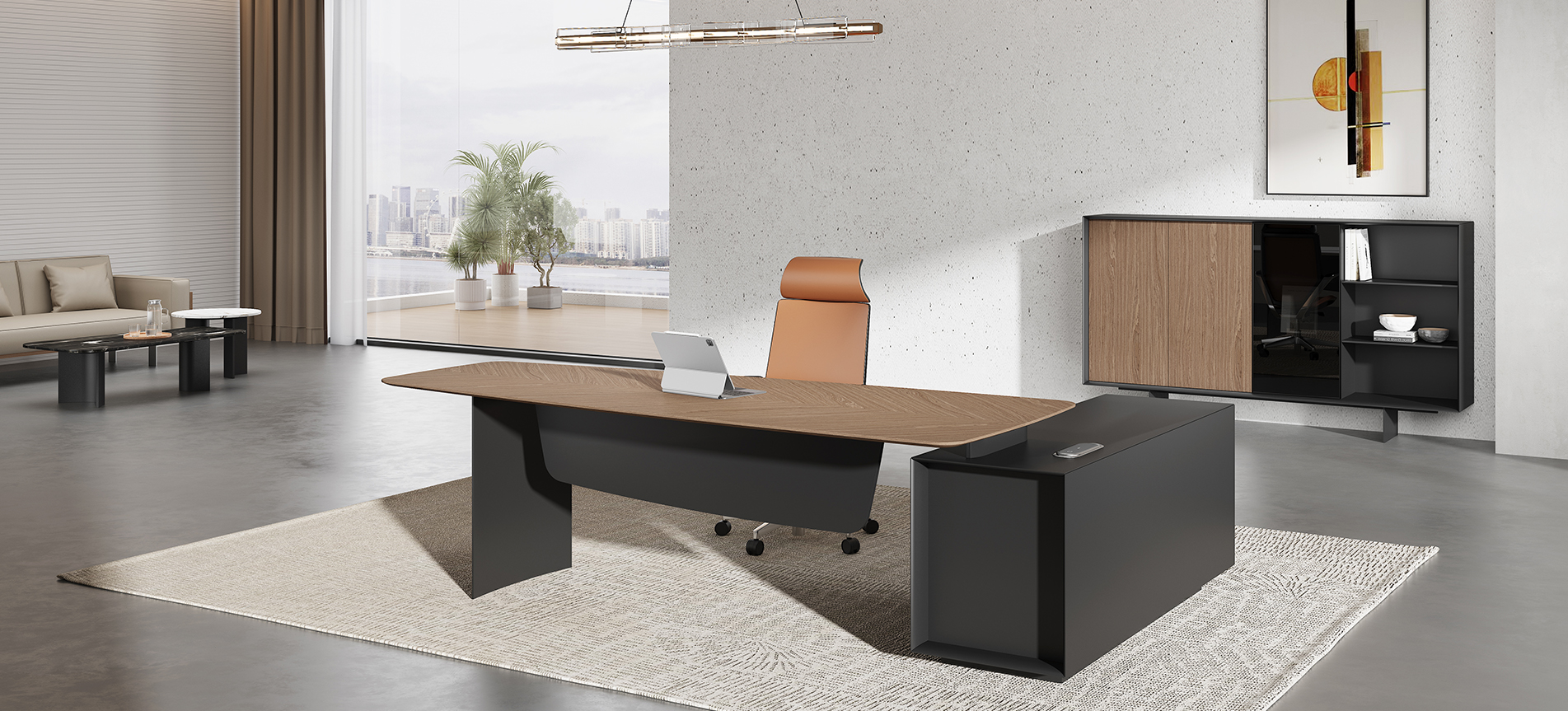
In modern enterprises, efficient collaboration has become a crucial factor in driving innovation and enhancing productivity. With the increasing prevalence of remote work and cross-team collaboration, traditional meeting formats can no longer meet the evolving demands. Therefore, designing a conference table that supports high-efficiency multi-person collaboration has become a focal point for many companies. This article will explore the design principles of such tables and their practical value in real-world applications.
The Design Concept of Multi-Person Conference Tables
1.1 Humanized Design
The design of modern conference tables increasingly emphasizes human-centered approaches, aiming to facilitate more comfortable and natural communication among participants. Designers typically consider factors such as table height, shape, and material to ensure each participant can engage in discussions in a relaxed posture, promoting the free flow of information. For instance, curved or U-shaped tables can reduce the sense of distance and enhance interaction among team members.
1.2 Flexibility and Multifunctionality
Modern conference tables are not merely flat work surfaces but multifunctional collaboration platforms. Designers integrate storage compartments, charging ports for electronic devices, and audio-visual interfaces into the tables to accommodate various meeting formats. Additionally, flexible table configurations and adjustable height settings allow teams to reconfigure them as needed, maximizing space utilization.
1.3 Technical Integration
With the advancement of technology, smart conference tables have become a trend. These tables typically incorporate advanced features such as embedded touchscreens, video conferencing equipment, and sound control systems, enabling remote collaboration and information sharing. Acting like a mini control center, they facilitate real-time document, video, and digital asset sharing among teams, enhancing meeting efficiency and effectiveness.
Application scenarios for multi-person conference tables
2.1 Internal Company Meetings
Within enterprises, multi-person conference tables are commonly used for team strategic discussions, project progress tracking, and creative brainstorming sessions. By appropriately arranging tables and chairs, teams can engage in in-depth discussions centered around shared goals, swiftly develop solutions, and advance project progress.
2.2 Customer Negotiation
When dealing with clients, the design of the conference table directly influences the atmosphere of negotiations. A comfortable and stylish conference table can enhance clients' trust and satisfaction. By focusing on business communication, designers can help businesses create a professional and pleasant environment during client interactions.
2.3 Cross-departmental Collaboration
In large enterprises, cross-departmental collaboration is becoming increasingly frequent. The multi-person conference table facilitates information exchange among employees from diverse backgrounds and specialties by providing an open discussion space. A flexible and adjustable spatial layout allows different teams to quickly gather, pool their strengths, and achieve common goals.
Future Prospects
As collaboration models continue to evolve, future conference table designs will place greater emphasis on intelligence, human-centricity, and sustainability. To adapt to flexible work environments, conference tables may develop toward modular and customizable directions to meet the specific needs of different enterprises and teams. Additionally, the use of eco-friendly materials will become a crucial design consideration, reflecting businesses' commitment to sustainable development.