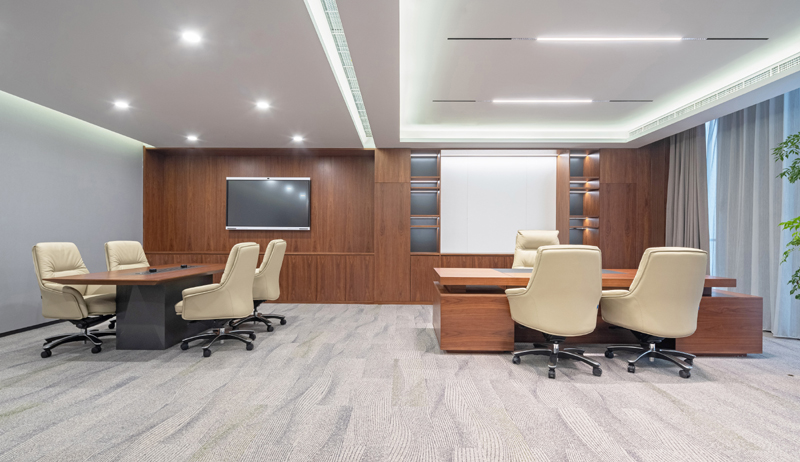

How to Choose a Large-sized Conference Table Suitable for Office Environments In modern office settings, conference tables are essential furniture, not only for team meetings but also for hosting crucial decision-making and collaboration processes. Large-sized conference tables, with their spacious design and conducive meeting atmosphere, are increasingly favored by businesses. However, selecting a large-sized conference table that suits your office environment is not an easy task. Here are some key factors that can assist you in making a wise choice.
Before purchasing a large conference table, it is essential to assess the spatial layout of the office. Measure the actual area of the conference room and consider the locations of fixed facilities such as doors, windows, and electrical outlets. The size of the conference table should match the size of the conference room, ensuring sufficient circulation space while maintaining comfort for use. An overly crowded environment may affect the effectiveness of meetings, while an oversized table may appear out of place in a small space.
Determine the number of participants and select the size of the conference table based on the required seating capacity. Generally speaking, at least 60-80cm of table space should be reserved for each participant to ensure comfort. Clarify the organization's meeting requirements, such as regular team meetings, business negotiations, or large strategic meetings, as this will directly affect your choice of the size and shape of the conference table.
Choosing the Right Shape There are various shapes of conference tables, such as rectangular, circular, oval, and U-shaped. The choice of shape depends on the nature of the meeting and the interaction style of the participants. A rectangular conference table is suitable for large meetings, allowing everyone to have a good view. A circular or oval conference table easily creates a harmonious atmosphere and is suitable for small discussions. A U-shaped table facilitates communication and presentation, making it ideal for demonstrations or training.
Material and Style The material and style of conference tables have a significant impact on the overall image of the office environment. Common materials for conference tables on the market include wood, glass, and metal. Choosing a design style and color that aligns with the company culture can not only enhance the visual aesthetics of the conference room but also reflect the professional image of the company. When selecting materials, durability and ease of cleaning and maintenance should also be considered.
In addition to basic functions, many modern conference tables are equipped with multimedia capabilities such as power outlets, USB ports, and video conferencing equipment. Choosing a conference table that meets the company's specific needs can greatly enhance the efficiency of meetings. For instance, if your team frequently holds video conferences, a conference table with multimedia ports would be an excellent choice.
Budget control: Setting a reasonable budget is a crucial step in purchasing conference tables. In the market, conference tables vary greatly in price depending on their materials, brands, and designs. It is important to ensure that the product chosen best meets your needs within the budget range, balancing quality and functionality while staying within the financial capacity of the company.
Choosing a suitable large-sized conference table can not only enhance work efficiency but also improve corporate culture and team atmosphere to a certain extent. By reasonably evaluating space, number of people, shape, material, function, and budget, you will be able to find the conference table that best suits your office environment, creating the best experience for every meeting.